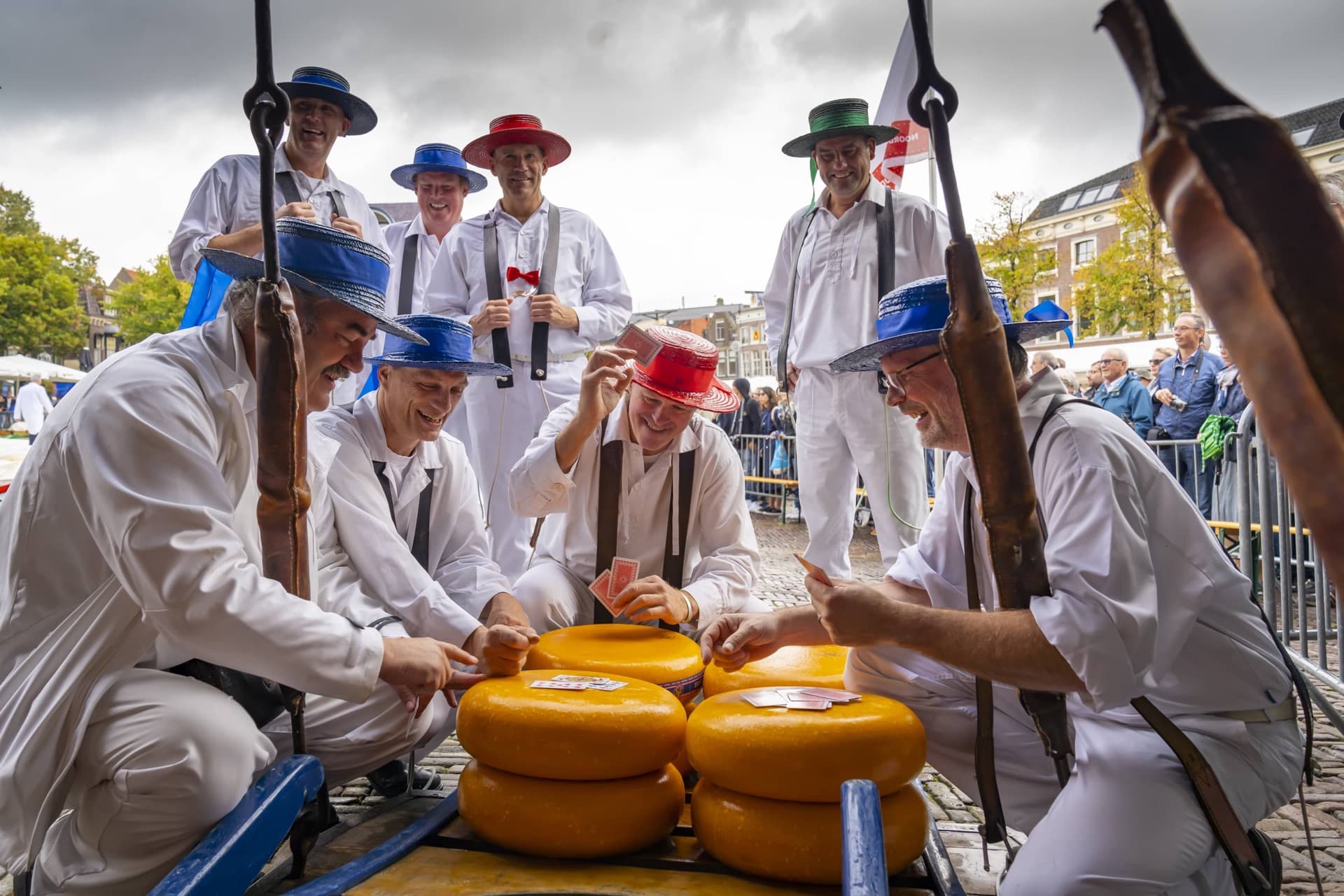
History of the Cheese Market
Cheese has been traded in the traditional way in Alkmaar since 1365.
Alkmaar cheese trading started in 1365
In 1365, the city owned one pair of cheese scales only, but this increased to four in 1612. The kaasdragersgilde (cheese carrier’s guild) is first mentioned in the archives in 1619. 1593, however, is considered the first year of the cheese market, which has always taken place on the Waagplein. This square has been extended several times in the course of two centuries, it was enlarged no fewer than eight times before it reached its current dimensions, which proves the importance of cheese trade for the city.
In the 17th century, cheese was traded on Fridays and Saturdays from May until All Saint’s Day, and in the 18th century on four days a week.
You might also enjoy reading these articles:
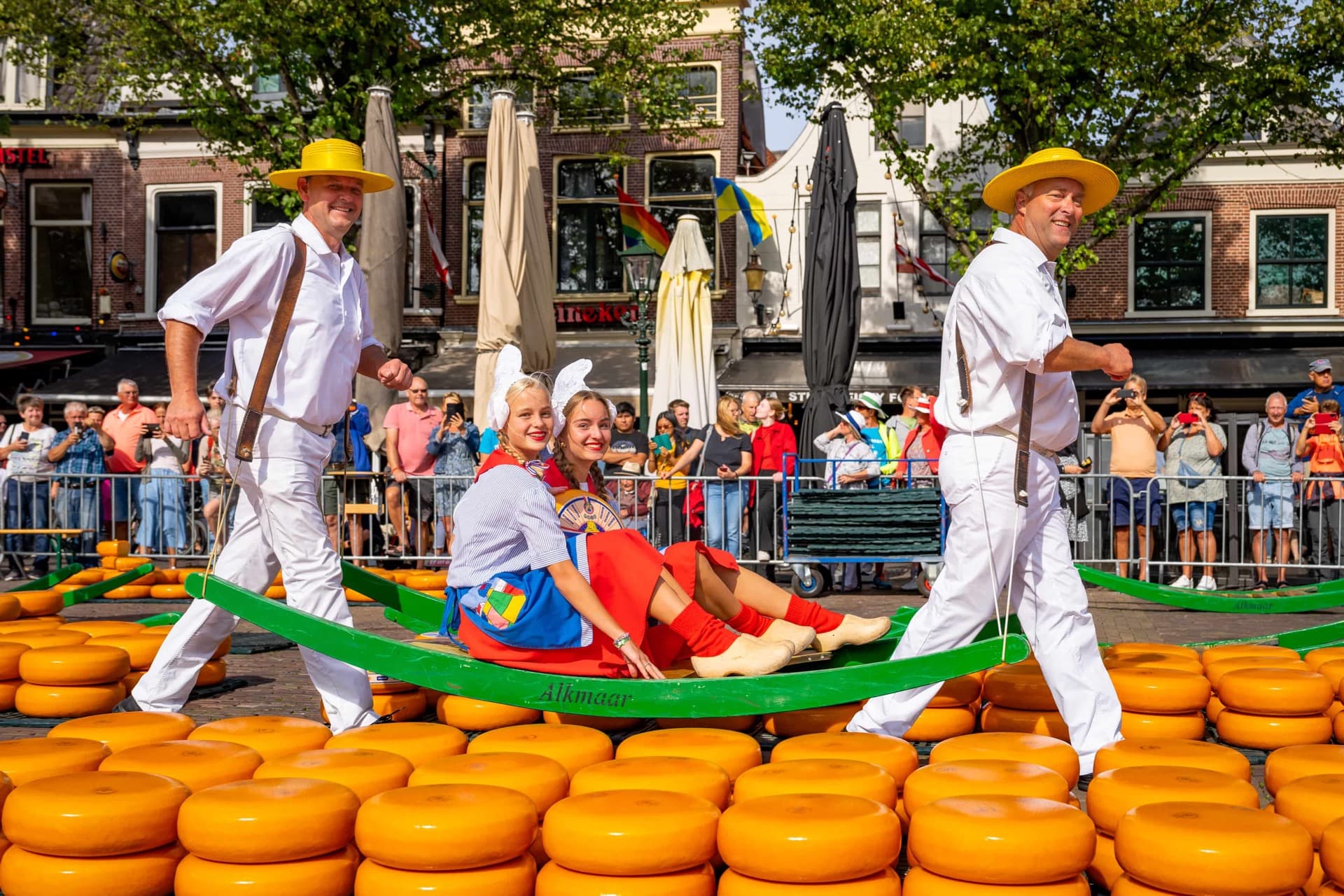
Cheese carriers
The cheese carrier guild consists of 30 men plus the cheese father. There are four groups active within the guild, so-called 'vemen'.
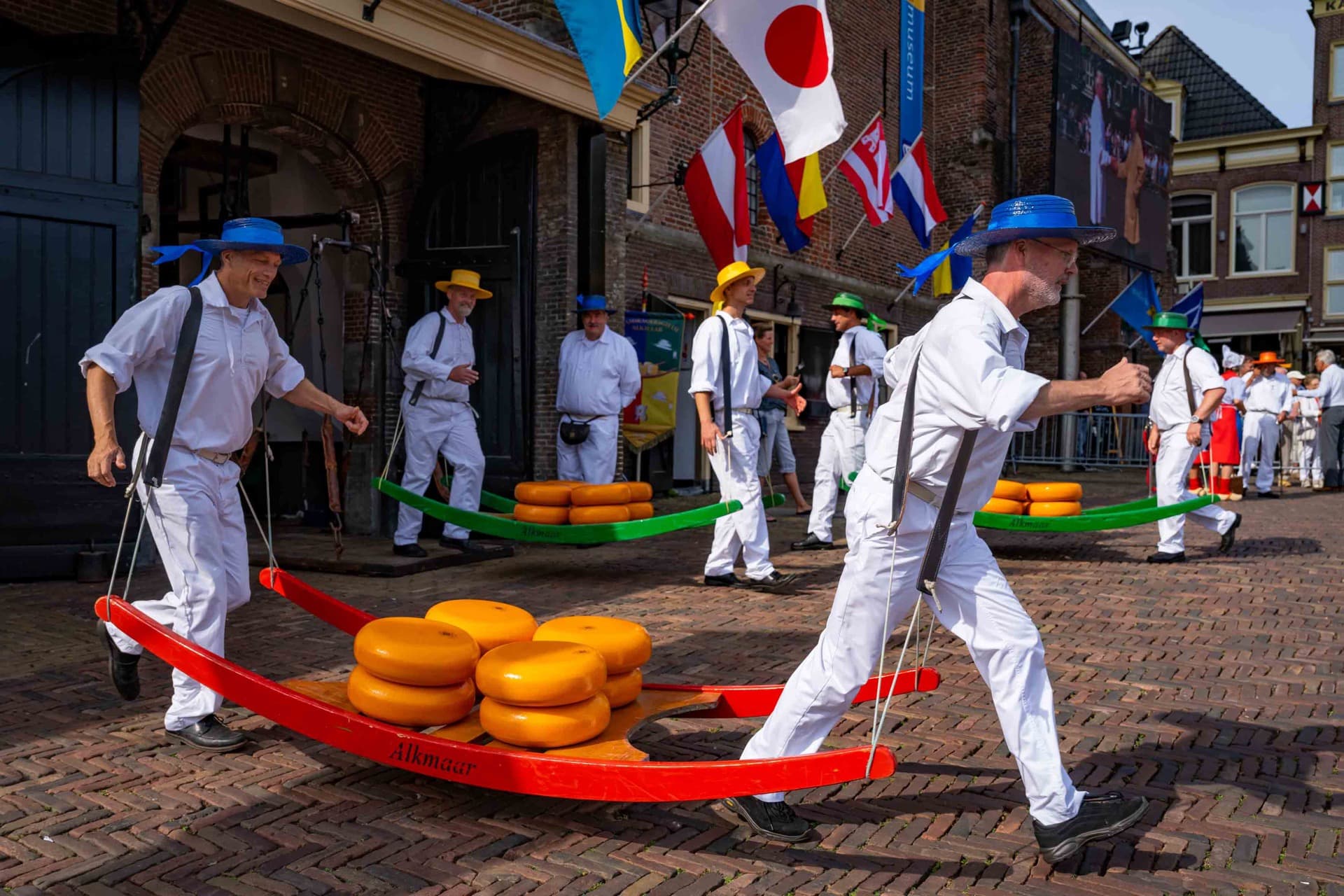
Guild of Cheese Carriers
Within the guild of cheese carriers, there are several roles, from Tasman to Cheese Father...
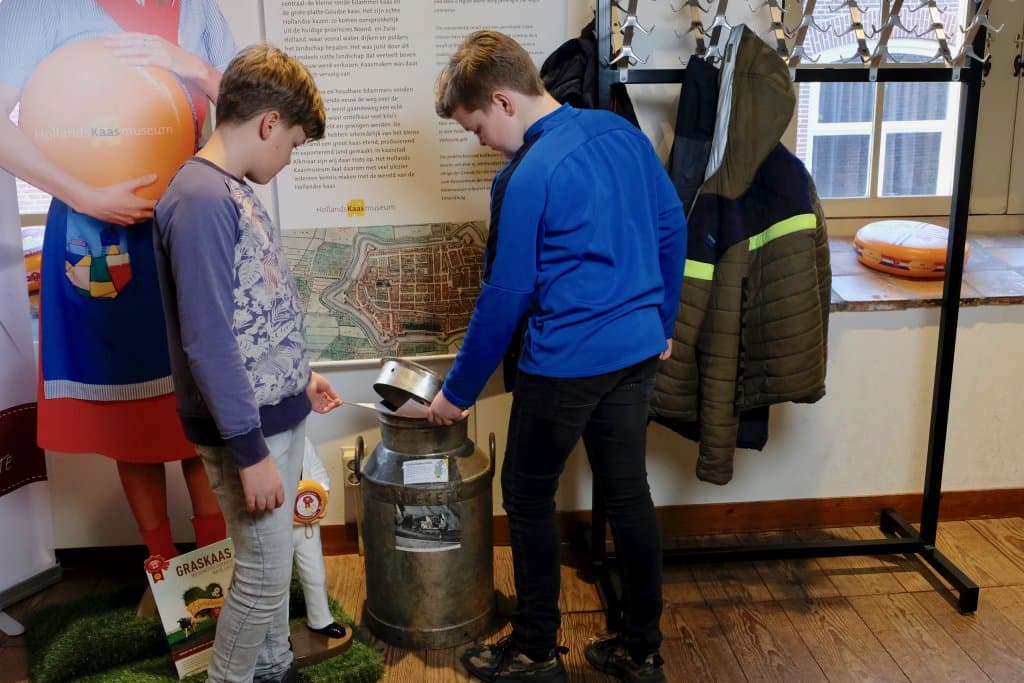
The Dutch Cheese Museum
The tastiest museum in the Netherlands located in the heart of Alkmaar.